Noticias y perspectivas

Laser Tailor Welded Blanks for Automotive Steel Sheets

Nov. 05, 2026

Laser is a new technology emerged in the 1960s. Afterwards, laser processing has been gradually applied to automotive, aerospace, machinery, electronics, medical and many other industries. The rapid development of the automotive industry has in turn boosted the advancement of laser processing technology.

Laser tailor welded blank technology changes the conventional process, in which several sheets of different thicknesses and strengths are stamped into separate parts and then welded together. Instead, sheets with different strengths and thicknesses are blanked and welded into a unified blank first, followed by integral stamping forming.

Advantages of Laser Tailor Welded Automotive Blanks

1. Flexible combination of different materials. Laser tailor welded blanks can combine steel sheets of different grades, thicknesses and surface conditions. This meets designers’ diverse material requirements for different vehicle zones. For example, coated steel can be used for corrosion-prone areas; lower-grade or thinner steel can be adopted for non-load-bearing regions; high-strength steel can be applied for heavily loaded positions. This reduces steel consumption, lightens the body weight, cuts vehicle energy consumption and lowers environmental pollution.

2. Integrated forming of combined components. With laser tailor welded blanks, assemblies originally made by joining multiple separate parts can be formed in one piece. It improves body assembly accuracy, simplifies working procedures, reduces tooling investment and lowers manufacturing costs.

3. Improved structural reliability and safety. Continuous laser welds replace discrete spot welds, enhancing structural stiffness. Meanwhile, high-strength and thicker sheets are placed at reinforced zones, so the reliability and safety of the whole vehicle body structure are improved.

4. Satisfy the demand for wide-width sheets in automobiles. Limited by mill width, only a few mills are capable of producing extra-wide sheets. It is much easier to manufacture wide panels via laser tailor welding.

Typical Applications of Laser Tailor Welded Blanks

These merits translate into high quality, high efficiency and low cost in mass production. In the ULSAB project, 16 tailor-welded stamped parts were used on one passenger car. Thanks to tailor welded blanks, the number of body components was reduced by approximately 20%, and weight was cut by 25%.

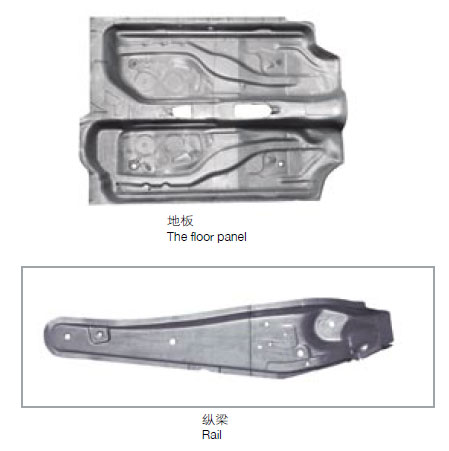
Laser tailor welded blanks are widely used for automotive inner door panels, longitudinal beams, floor panels, pillars and other internal structural parts.
Laser Tailor Welded Blanks for Automotive Steel Sheets

Últimas noticias y perspectivas del sector
Laser Tailor Welded Blanks for Automotive Steel Sheets

Laser is a new technology emerged in the 1960s. Afterwards, laser processing has been gradually applied to automotive, aerospace, machinery, electronics, medical and many other industries. The rapid development of the automotive industry has in turn boosted the advancement of laser processing technology.

Nov. 05, 2026

JIS G3131 SPHC vs SPHD vs SPHE: Which Grade Is Suitable for Your Application?

This guide compares JIS G3131 hot rolled steel grades SPHC, SPHD, and SPHE, explains their formability and trade-offs, and offers practical selection and purchasing advice.

Nov. 05, 2026

Hot Dipped Galvanized Steel Coil vs Galvannealed Steel: Which Is Better for Auto Parts?

This guide compares Hot Dipped Galvanized Steel Coil with galvannealed steel for automotive parts, covering coating specifications, durability, paintability, welding, forming, purchasing checks, and how to choose for each application.

Nov. 04, 2026

Guide to GMW Automotive Steel Grades

Explore GM GMW2M, GMW3032M and GMW3399M automotive steel grades, including CR, IF, BH, LA, MC, DP, TR and MP-LCE materials.

Nov. 03, 2026

BMW Automotive Steel Grades Guide

Explore BMW GS 93032 and GS 93005-2 steel grades, including CR, HR, IF, BH, LA, MC, DP, TR, CP and MS automotive steel.

Nov. 03, 2026

VW 50065 and VW 50111 Steel Grades: Complete List and Classification Guide

Explore VW 50065 and VW 50111 automotive steel grades, including CR, HR, GI, EG, LA, BH, IF, DP, CP, TRIP, MS and FB steel designations.

Nov. 03, 2026

What Certifications Should Automotive Steel Manufacturers Provide to Buyers?

A practical guide to certifications and quality documents from automotive steel manufacturers, including IATF 16949, ISO standards, inspection certificates, traceability checks, and buyer questions.

Nov. 03, 2026

Top 5 Factors to Consider When Selecting AHSS for Automotive Crash Structures

A practical guide to AHSS selection for automotive crash structures, covering five engineering factors, steel sourcing options, indicative cost considerations, validation tests, and questions to ask suppliers.

Nov. 02, 2026

Pros and Cons of Stainless Steel for Automotive Exhaust Systems

Learn the pros and cons of stainless steel for automotive exhaust systems, compare 409, 304, and 316 grades, and find practical guidance on cost, installation, and upkeep.

Oct. 30, 2026

5000 vs 6000 Series Aluminum Coil: Which Is Better for Automotive Body Panels?

A practical comparison of 5000 vs 6000 series aluminum coil for automotive body panels, covering alloy properties, forming and paint-bake performance, cost drivers, selection scenarios, and supplier checks.

Oct. 29, 2026

Productos populares

Bobinas y bobinas de acero inoxidable para automóviles. Láminas SUS304, 316L, 301, 321, 430

Las bobinas y láminas de acero inoxidable son productos de acero a base de aleaciones compuestos principalmente de cromo, níquel y hierro. Se forma una película pasiva densa rica en cromo sobre la superficie del acero, que proporciona un excelente rendimiento a prueba de herrumbre y resistencia a la oxidación para prevenir la corrosión.

Chapa de acero electrogalvanizado: aplicación para automoción

La chapa electrogalvanizada es una tipo de producto de recubrimiento por deposición electroquímica de metal con excelente procesabilidad, buena resistencia a la corrosión y rendimiento de recubrimiento, que puede cumplir con el procesamiento de piezas de carrocería de automóviles de alta calidad.

Acero eléctrico laminado en frío de alta calidad para automóviles (acero al silicio) hoja)

Suministramos acero eléctrico laminado en frío para automóviles de alta calidad (láminas de acero al silicio para automóviles), incluidos grados no orientados y de grano orientado diseñados para la industria automotriz.

Acero automotriz de alta resistencia CR330Y590T-DP CR440Y780T-DP CR440Y780T-DH CR700Y980T-DP

El acero para automóviles de alta resistencia se refiere al acero avanzado de alta resistencia (AHSS) diseñado para la fabricación de automóviles que cumple con las normas VDA.

Acero de doble fase HC340/590DP laminado en frío

Sin extensión de rendimiento, sin envejecimiento a temperatura ambiente, baja relación de rendimiento/resistencia a la tracción, alto endurecimiento por deformación exponente y alto valor de endurecimiento por horneado.

Automotriz 5000 y 2000 Bobina de aluminio serie 6000 para vehículos ligeros

La bobina de aluminio es una hoja larga y continua de aleación de aluminio enrollada en forma de bobina. Suministramos principalmente bobinas de aluminio de grado automotriz de las series 5000 y 6000 para aligerar vehículos.

Bobinas de acero galvanizado por inmersión en caliente

Bobinas de acero galvanizado por inmersión en caliente DX54D+Z HC420LAD+Z HC420/780DPD+Z HC700/980DPD+Z Acero HDG AHSS para automoción

Laminación en caliente: SPHC, SPHD, SPHE, SPHT1/2/3, S355J0, S355JR, S355J2

Los tres grados son acero con bajo contenido de carbono laminado en caliente estándar JIS G3131, especialmente diseñados para estampado y estampado de automóviles. conformado en frío.

Acero decapado laminado en caliente de alta resistencia S550MC / S600MC / S650MC / S700MC

Acero estructural decapado laminado en caliente de alta resistencia S550MC, S600MC, S650MC y S700MC. Esta serie de acero cumple con la norma EN 10149-2. Es acero laminado en caliente de alta resistencia producido mediante laminación termomecánica, especialmente diseñado para conformado en frío.